Hobby Farm or Training Facility? Choosing the Right Aiken Horse Property for Your Goals
The honest answer is that a hobby farm and a training facility are not two price points on the same list. They are two different ways of living on your land, and the right one depends on how many horses you keep, whether other people's horses will live there too, whether the barn needs to pay its way, and how much of your week you want to spend at the farm. In my 20+ years selling horse property in Aiken, I have seen buyers fall in love with a training barn and then realize they never wanted the business, and I have seen owners of small hobby farms quietly outgrow their stalls. The goal of this guide is to help you tell the two apart before you start touring, so the property you buy matches the life you actually want to live.
Aiken makes this decision harder than most places, because it is one of the few towns in the country where both options exist beautifully side by side. The Horse District is full of private estates with a few stalls and a riding ring, while the same roads lead to working training barns that board, school, and show horses for a living. Either one can be a wonderful home. The question is which one is yours.
What a hobby farm actually is in Aiken
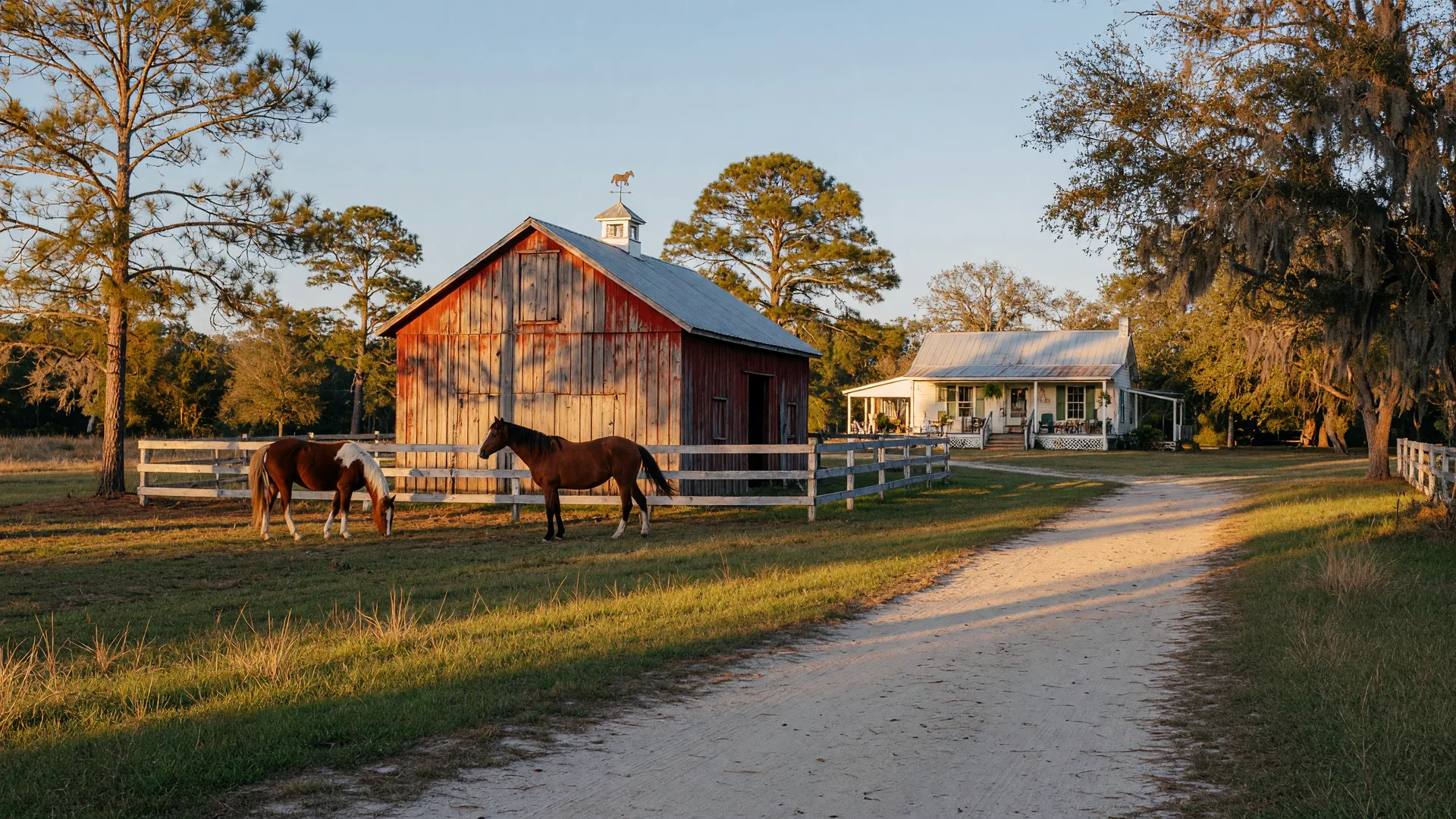
A hobby farm is a private residence first and a horse property second. It is typically owned and run by the people who live there, for their own horses, with no public clientele and no obligation to anyone beyond the family. The classic Aiken version sits on enough acreage for pasture and turnout, holds a modest barn with a handful of stalls, and keeps a small arena or riding ring for home schooling. The horses belong to the owners, the schedule belongs to the owners, and the farm answers to no outside board bill or show client.
That does not make it small in ambition. Many of the finest private farms in Aiken are hobby farms in the technical sense: beautifully kept, thoughtfully managed, and built around two or three horses rather than twenty. The defining feature is use, not size. If no one pays you to keep their horse, and the barn is for your own herd, you are living on a hobby farm no matter how many acres or stalls you have.
What a training facility actually is
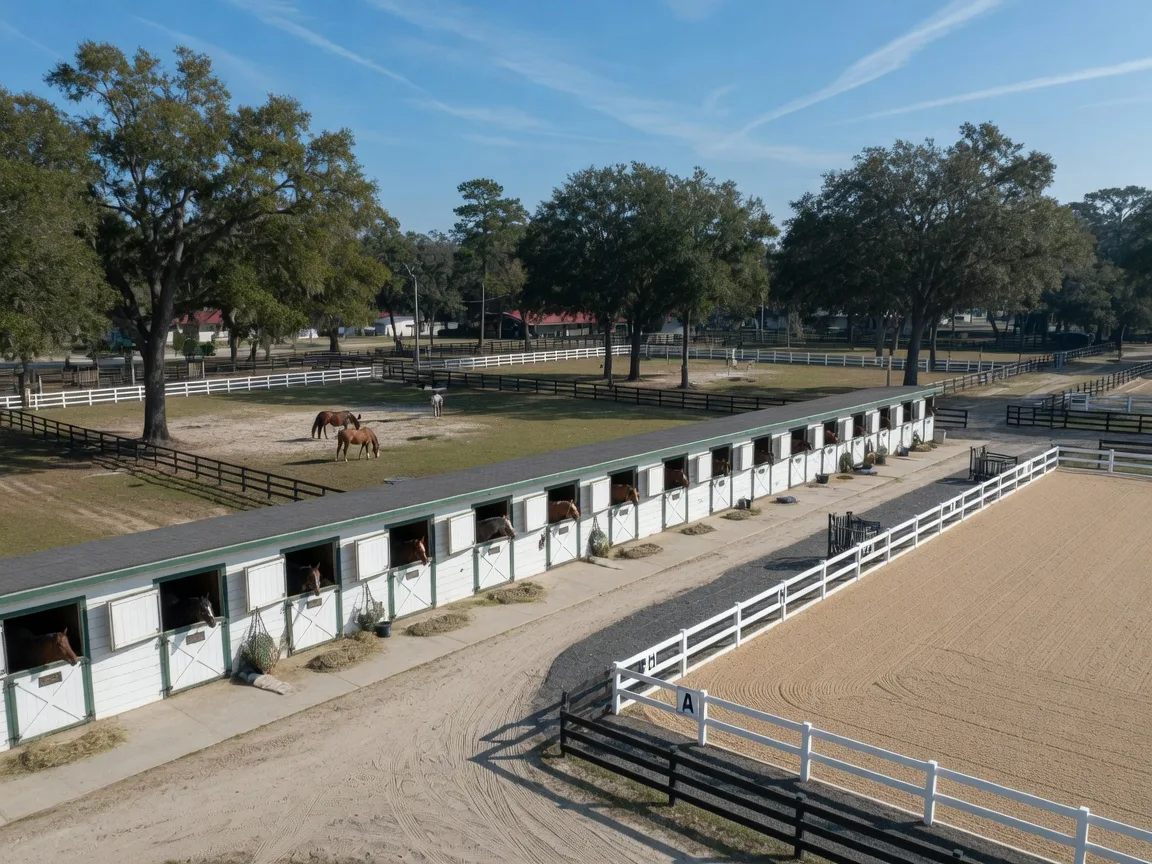
A training facility, in the sense buyers usually mean, is a working horse business. It boards other people's horses, takes horses in for training, teaches lessons, or some combination of the three, and the farm's income helps carry its costs. The infrastructure tends to follow the business: more stalls, a larger or covered arena, wash racks, tack and feed rooms sized for a herd, staff quarters or housing, and the kind of daily routine that runs on a clock because horses and clients expect it to.
The moment a barn crosses from private to commercial, the property stops being simply a home and becomes a small equestrian enterprise. That changes how you think about staffing, insurance, zoning, the driveway, even the parking. It also changes what the property can do for you: a training facility can generate income, support a training career, and keep you connected to the sport in a way a private farm never will.
The acreage, barn, and arena math that separates the two
Acreage is where the two paths first diverge. A private hobby farm can work beautifully on a relatively compact parcel, because the land has to support a small herd, a few paddocks, and a modest arena. My acreage guide and the deeper question of how many acres you really need walk through the math, but the short version is that the number is driven by how many horses you keep and how you rotate pasture, not by any one universal figure.
A training facility needs more of everything, because it must support turnover. More stalls mean more manure, more hay, more water, more waste storage, and more turnout capacity. A barn that takes in clients needs separation: quarantine space for new arrivals, a wash stall, a tack room with room for more than one rider's gear, and an arena that can run a lesson while another horse schools. In practice that usually means a larger footprint, a heavier-duty facility, and more infrastructure than a private farm would ever need. When you compare listings, do not compare acreage alone. Compare the facility against the herd you plan to keep, plus the growth you honestly expect.
Private use versus commercial use changes the zoning conversation
This is the point where a lot of buyers get into trouble, so I want to be direct about it. Keeping your own horses on your own land is a private residential use. Boarding the public, taking horses in for training, and teaching lessons are commercial uses, and they are governed differently depending on whether your parcel sits in the City of Aiken or in Aiken County. The City of Aiken's Horse District permits equestrian uses, including boarding and training, but some properties there carry deed restrictions that limit them to private, noncommercial use. In the county, a Residential-Horse district and a Residential-Horse Business district are different classifications for a reason.
The practical rule I give every buyer is simple: if there is any chance you will take on boarders, clients, or students later, start the zoning conversation before you make an offer, not after you fall in love with the barn. My zoning guide for the Horse District explains the rules in detail, and I am glad to pull the records for any specific parcel with you. The last thing anyone wants is to buy a beautiful training barn and then learn the deed says private use only.
The staffing question: who does the work?
On a hobby farm, the answer is usually you. Two horses, three stalls, and a small paddock rotation are very doable for one household, especially with an automatic waterer, a good manure plan, and a farrier and vet on a regular schedule. The farm is a labor of love, and for most owners that is exactly the point.
A training facility is a different equation entirely. Ten boarded horses need someone on the property every day, often twice a day, and that someone is rarely just the owner. Grooms, barn managers, riders, and grounds help become part of the budget and part of the property's needs. My guide to building your horse property team in Aiken walks through the roles and the staffing reality, and it is worth reading before you decide whether a training barn fits your life. Some owners love running a full barn. Others discover very quickly that they bought a job they did not want.
Lifestyle: the weekday reality of each setup
The difference between the two often shows up on a random Tuesday. On a hobby farm, Tuesday is your own: feed in the morning, a ride when it suits you, a quiet evening. On a training facility, Tuesday runs on the clock, because clients pay for a schedule and horses expect consistency. If you thrive on routine, a barn full of activity, and the energy of a working operation, that clock is a feature. If you came to Aiken for quiet mornings and your own horses, it is a burden.
This is also why I always encourage buyers to spend time at the kind of community they think they want. Tour a working training barn and a private farm on the same trip. Notice which one makes your shoulders relax. That feeling is data, and it is usually more reliable than a spreadsheet.
Resale and flexibility down the road
Both setups resell well in Aiken because both have a real buyer pool. A turnkey private farm appeals to families and retirees who want their horses at home without the business. A well-built training facility appeals to professionals, and a facility with clean, verifiable commercial status can command a different kind of buyer altogether. The types of equestrian facilities in Aiken are each valued on their own terms.
The more flexible play is usually the private farm with room to grow, because it can stay a hobby farm or step up later, while a property locked into private use by a covenant cannot easily become commercial without going through the approval process. That flexibility is worth real money to many buyers, which is one more reason to understand the restrictions on any property before you commit.
Questions to ask yourself before you choose
Before you start touring, sit down and answer these honestly. They will save you from falling for the wrong barn.
- How many horses will actually live here? Not how many you daydream about, but how many you will keep this season and next.
- Will any of them belong to other people? If the answer could ever be yes, commercial use and zoning move to the top of your list.
- Does the barn need to earn money? If it does, you are buying a business and should budget for one.
- Who will do the daily work? You, a partner, or hired help? The answer sets the size of barn you can actually run.
- What do you want Tuesday to look like in five years? This one question sorts more buyers than any other.
Both are wonderful Aiken lives
I have helped buyers settle happily into both. A private hobby farm gives you your own horses and your own schedule. A training facility puts you at the center of the sport with a working barn around you. Neither is better. The right one is the one that matches the life you actually want, and I can help you find it either way. The full guide to buying horse property in Aiken walks through every step of the search.
Let's discuss your acreage, location, facilities, and goals.
Whether you picture a quiet hobby farm or a working training facility, I can help you find the Aiken horse property that fits. We will talk through your herd, your plans, and your budget, then build a property search around what you actually need.
Linda Limehouse · Meybohm Real Estate
Cell: 803-278-1800
Office: 803-278-4437
Web: firstaiagent.com
SC License 67440 · GA License 323267