
Manure and Compost on an Aiken Horse Property: Turning Daily Waste Into Rich Sandhills Soil
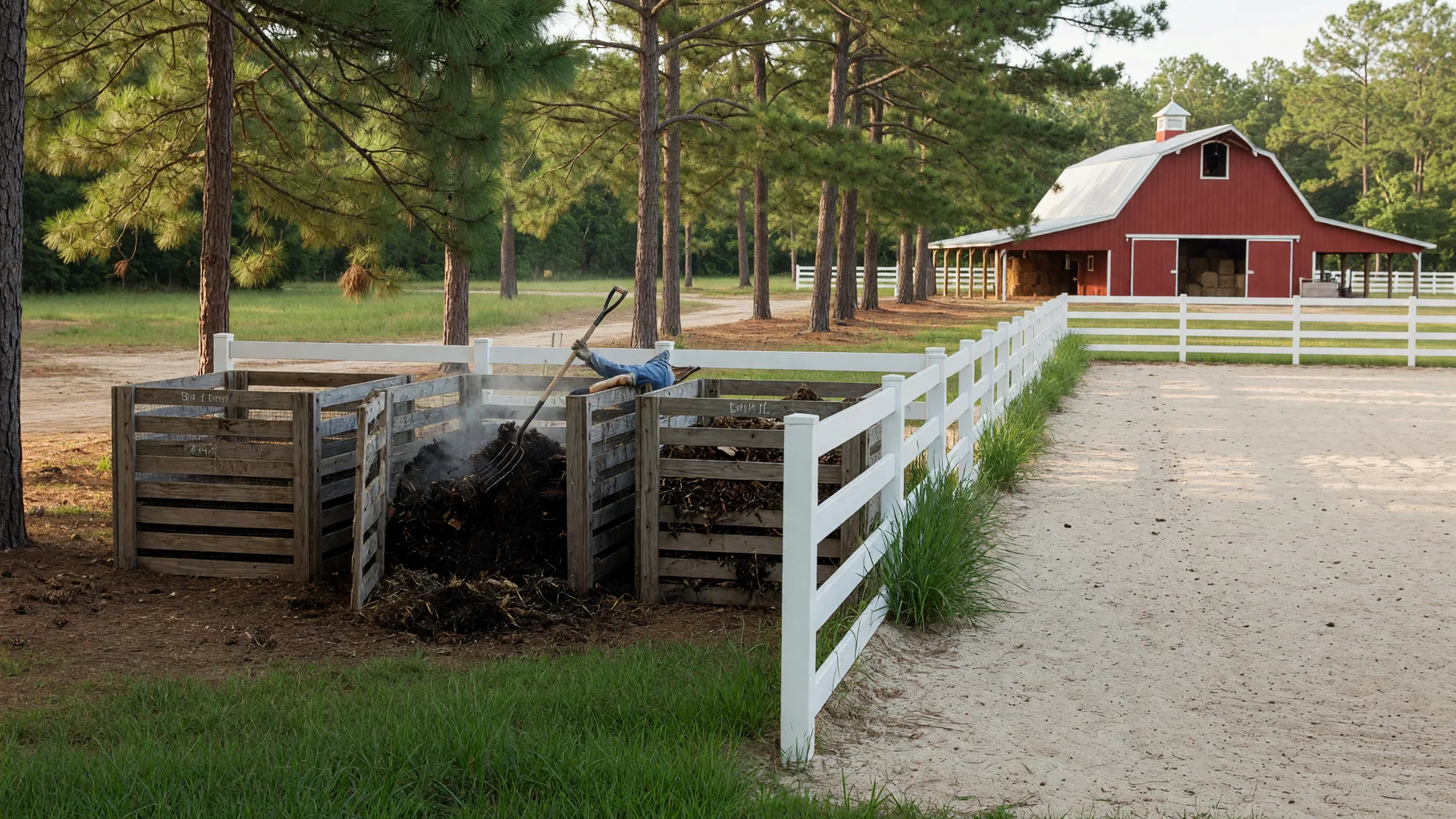
After more than 20 years working with horse property owners across Aiken, North Augusta, and the wider CSRA, I can tell you that manure is the one topic almost nobody brings up at a listing appointment, and the one every farm owner thinks about every single day. A single average horse produces around fifty pounds of manure a day, which adds up to roughly a cubic yard each month and close to nine tons a year. On a sandy Sandhills property, how you handle that steady stream shapes everything from pasture health and fly pressure to the water that fills your well. The good news is that the same sandy soil that drains so well also responds beautifully to compost, so what feels like a chore is really an opportunity. Here is what every Aiken horse property owner, and every buyer, should understand about manure and compost.
Why the Sandhills make compost so valuable
Aiken's famous Sandhills soil drains fast, which is one of the reasons the footing here is so good for horses. That same coarse, sandy character means the soil is naturally low in organic matter and quick to lose nutrients to groundwater. Adding compost is the single most effective way to build that organic matter back, helping the soil hold water and nutrients and resist erosion. Local farm guidance, including Aiken County's Greener Pastures and Cleaner Streams program, points to composting as the recommended on-farm practice, and for good reason. When you view a horse property for sale, it is worth asking how the current owners manage their manure, because the answer tells you a lot about how the pastures have been cared for.
What manure really is, and why fresh isn't always better
Manure straight from the stall is high in nitrogen and low in carbon, so on its own it can actually burn young grass or tie up nitrogen in the soil while it breaks down. It can also carry weed seeds, parasites, and fly larvae. That is why the goal is compost: a managed mix of nitrogen-rich manure and carbon-rich bedding, straw, or leaves that is kept moist, aerated, and given time to heat up. A properly working compost pile heats internally enough to kill weed seeds, parasites, and fly larvae, and it shrinks the volume of what you are storing by roughly half. What you are left with is a stable, slow-release soil amendment that builds the Sandhills soil instead of stressing it.
Right-sizing your system
Planning a compost system starts with an honest count of how many horses you keep. As a rough rule, plan to store and compost roughly ten to thirteen cubic yards of material per horse per year once bedding is included. A pile needs to be at least three feet by three feet by three feet to hold enough heat to work properly, so a standard three-bin system is the most common setup on a small farm. You fill one bin, let it cook, turn it into the next as it finishes, and spread from the last, which keeps a steady rotation going without ever spreading unfinished material. Many owners plan for the finished compost to age about six to nine months before it goes back onto the pasture.
If you are evaluating a property, look for where the manure system sits in relation to the barn, the pastures, and especially the water. Good placement keeps the pile convenient to reach with a wheelbarrow or small tractor, far from neighbors, and well away from streams, ponds, wells, and ditches. That last point matters more than most buyers realize, because sandy soil drains so quickly that nutrients from an unmanaged pile can reach groundwater fast.
Balancing carbon and nitrogen
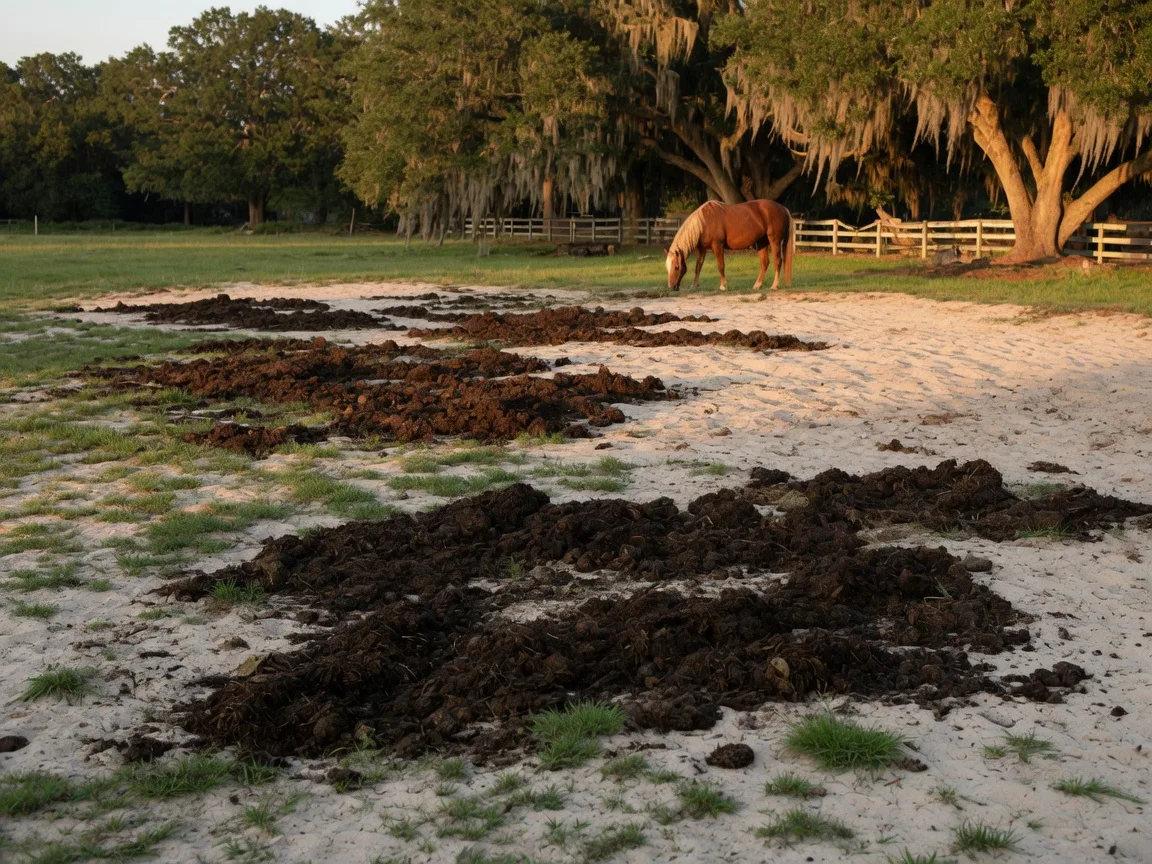
Composting works best when the pile balances carbon and nitrogen, and horse manure tends to run a little nitrogen-heavy on its own. The fix is simple: mix in carbon-rich bedding and amendments. Straw, dry leaves, and many types of wood shavings all add the carbon that balances the nitrogen in the manure. The right mix keeps the pile heating, speeds the process, and cuts down on odors. When the balance is off, the pile tends to tell you, either by going cold and slow when there is too much carbon, or by turning strong and smelling of ammonia when there is too much nitrogen.
Compost, fly control, and the seasonal rhythm
One of the quieter benefits of composting is what it does for flies. Flies breed in moist, fresh manure, so regular stall cleaning and picking up the paddocks is the first line of defense. Composting takes that further: a pile that reaches proper internal temperatures destroys fly larvae, and spreading finished compost in a thin layer lets it dry out quickly so it does not become a new breeding ground. During the hot Carolina months, when fly pressure peaks, keeping the manure system moving is one of the most effective things an owner can do, right alongside a good barn and pasture routine.
A note on soil testing
Before you spread compost across a pasture, have the soil tested first. The Clemson Agricultural Service Laboratory offers soil testing with lime and fertilizer recommendations for South Carolina properties. A simple test tells you what your Sandhills pasture actually needs, so you apply the right amount and protect both your grass and the groundwater below it.
What this means for buyers
If you are in the middle of a search, a manure management system is one of those quiet details that separates a well-cared-for property from one that will need attention from day one. A thoughtful, well-placed compost setup tells you the owners understood their land and their horses. A pile pushed right against the fence line, close to a stream, or in a low spot that floods should prompt a few extra questions during your due diligence. It is rarely a deal breaker, but it is exactly the kind of infrastructure a serious horse person notices, because it shapes your first year on the property.
Aiken's horse country runs on the health of its soil and its water, and the way each farm handles its manure is a small but telling part of that. For owners, composting turns a daily task into the thing that keeps pastures green and ponds clear. For buyers, understanding it helps you read a property the way a horse person does. If you are shopping for an Aiken horse property and want a partner who can help you weigh everything from the barn to the manure system, I would be glad to help you think it through.
Let me help you evaluate the details that keep a horse property healthy for years.
From pastures and water to barns and composting systems, I can help you find an Aiken horse property built to thrive.
Schedule a Consultation