
Moving Your Horses to Aiken: Shipping, Health Requirements, and Settling Into Horse Country
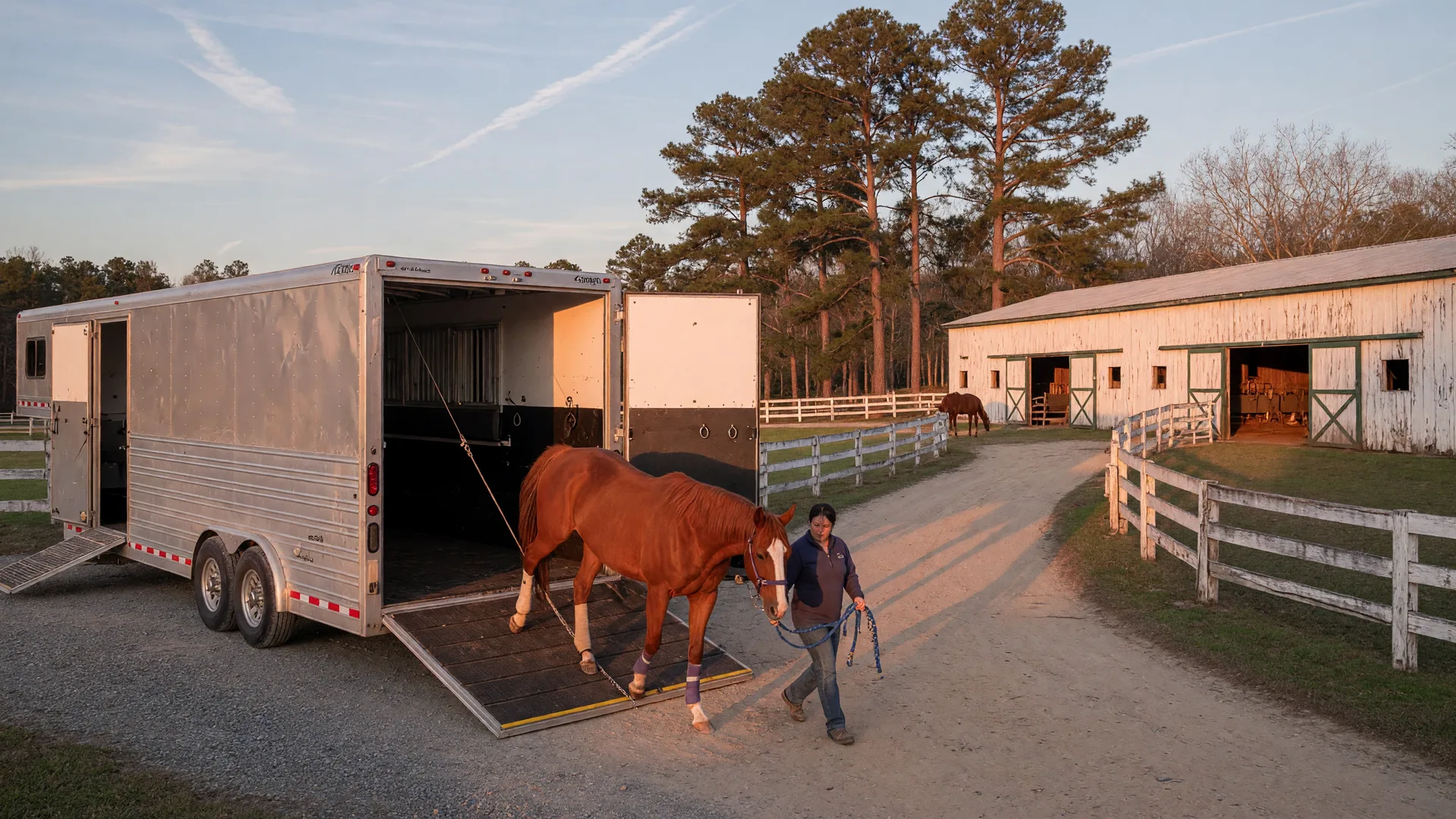
Every fall and winter, horses arrive in Aiken by the hundreds, shipped in from the Northeast, the Midwest, and Florida for the months of showing, eventing, polo, and hunting that make up the Winter Colony season. Moving horses well is a mix of paperwork, planning, and patience: South Carolina requires a health certificate and a current negative Coggins test before a horse crosses the state line, the recent equine herpesvirus rules have added another layer of safeguards, and the property you land on should be set up to welcome a tired horse through its first week. This guide walks through each step, from the vet forms to the first trail ride, so your horses arrive rested, healthy, and ready to love the Sandhills as much as the people who live here do.
Why Fall and Winter Are Aiken's Busiest Arrival Months
Aiken's equestrian season runs roughly from October through April, a rhythm that began more than a century ago when the first Winter Colony families brought their horses south to escape harsh Northern winters. The mild climate, the sandy, well-draining training surfaces, and the deep network of trails and venues keep that tradition alive today: trainers, riders, and their horses pour into the area as the leaves turn, and the Aiken Training Track fills with young Thoroughbreds conditioning for the spring. For anyone moving horses here, that seasonal rhythm shapes the plan in two practical ways. First, transport capacity tightens in the busy months, so you book the haul early. Second, the arrival of so many horses means the local veterinary, farrier, and support network is in full swing when you get here, which is very good news for settling in.
The Paperwork Before You Load: Health Certificates and Coggins Tests
The first step of any move is a conversation with your current veterinarian, because the paperwork starts with them. Any horse brought into South Carolina from another state must travel with an Interstate Certificate of Veterinary Inspection, the health certificate commonly shortened to ICVI or just CVI. It is valid for 30 days from the date it is issued, so time it to cover the day you load, and it must include official identification of each animal: an accurate description of name, age, breed, color, gender, and markings, plus any permanent identifiers such as brands, tattoos, or scars, or an ISO-compliant microchip number. In addition, any equid six months of age or older imported into the state must have a negative EIA test, the Coggins test, within the previous 12 months. Some sale barns and facilities also ask for proof of a negative Coggins on younger foals, so carry the paperwork for every horse on the trailer regardless of age.
The practical translation is simple: call your vet a few weeks before the move, get the health certificates issued in the window that covers your travel dates, make sure every horse's Coggins is current and the paperwork matches each horse's identification, and keep hard copies and digital copies with you for the whole trip. You will not be stopped at the South Carolina line and asked to produce them in most cases, but the paperwork travels with the horse by law, and the first person who asks is likely to be your new veterinarian, your boarding facility, or a show grounds office, all of whom will want to see it before your horse is unloaded.
The EHV-1 Layer: What the Enhanced Import Rules Add
In the wake of a multi-state equine herpesvirus outbreak, South Carolina strengthened its import requirements for out-of-state equines, and anyone moving horses here should know exactly what that adds. Alongside the standard health certificate, the state now expects the certificate to include a statement that the horse did not originate from a premises that was quarantined or exposed to equine herpesvirus in the 21 days before travel. For travel that is not a change of ownership, the state also recognizes the Extended Equine CVI, or EECVI, which can remain valid for up to six months, a helpful option for horses that are training in Aiken for the season and may travel onward. The authority behind all of this is Clemson University Livestock-Poultry Health and the South Carolina State Veterinarian, which is the same office your new veterinarian can call if any question comes up.
The takeaway for movers is to work with a veterinarian who is current on interstate health rules, ask them to include the equine herpesvirus statement on the certificate, and keep a documented record of your horse's premises history for the weeks before travel. This is not a burden once you know it is coming; it is simply one more item on the pre-move list, right next to the Coggins and the fit of the shipping boots.
Booking the Haul: Transport Companies, Trailers, and Timing
For most long-distance moves, a professional equine transport company is the right call. National and regional haulers serve Aiken door to door on regular routed schedules, and they bring the experience of long hauls, proper ventilation, and insurance coverage that a first-time shipping arrangement often lacks. When you get quotes, ask about the specifics that matter on a long trip: air-ride suspension, adequate ventilation and temperature management, the stall configuration that fits your horses, scheduled stops for water and rest, and the company's insurance and experience with your route. Companies such as Equine Express N.A. and American Horse Transportation are among the well-known names that cover the Southeast, and an equestrian-focused hauler will walk you through the whole plan before a wheel turns.
Timing is everything. Because so many horses move in for the season, good haulers book up well ahead of the October through April influx, so reserve your dates as soon as you know them, ideally several weeks in advance. If you are moving horses yourself or plan to haul them locally once you arrive, Aiken is well served for equipment: The Hitch & Tow is a local trailer dealer in Aiken carrying brands like 4 Star, Sundowner, and Kingston along with pre-owned inventory, which is useful whether you are buying your first trailer or upgrading for the move. And if your horses arrive by professional transport, the Aiken Training Track and the town's boarding farms are experienced at coordinating arrivals, so a well-organized drop-off is routine for everyone involved.
The Arrival: Vet Check, Rest, and the First Quiet Days
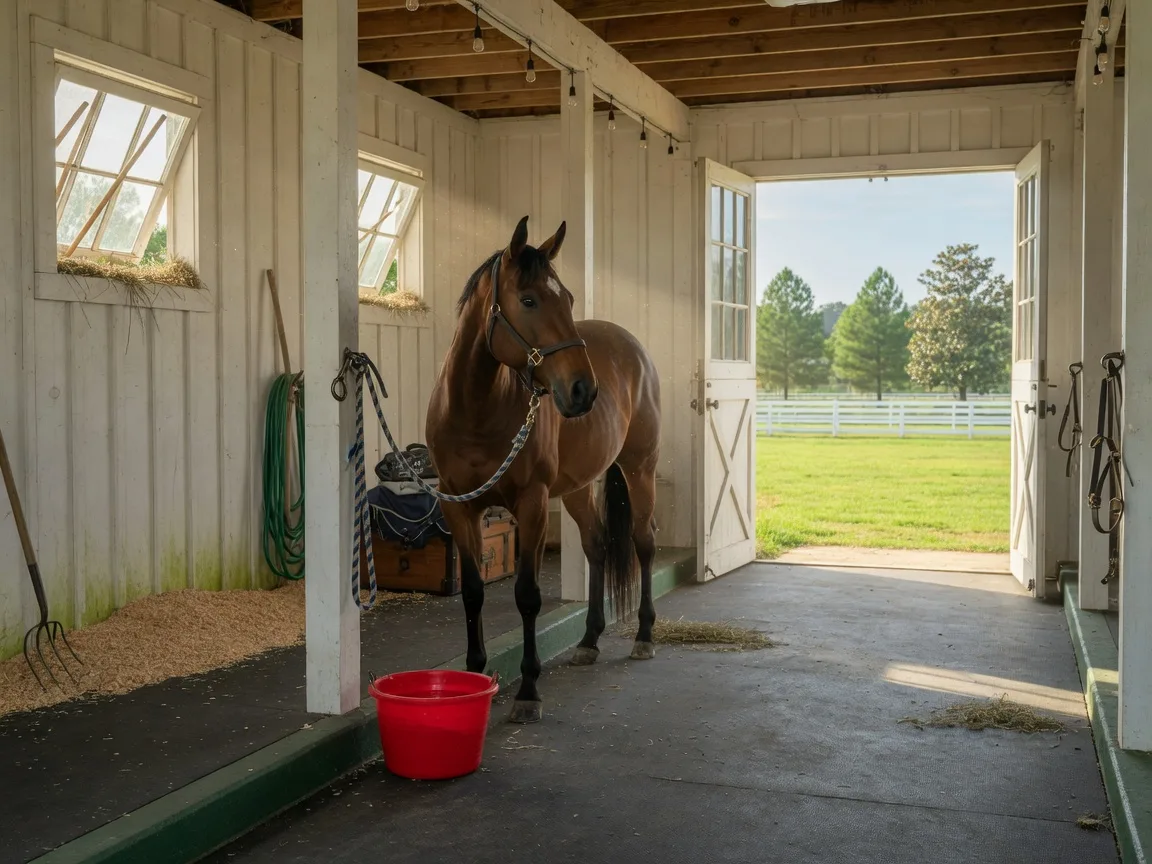
When the trailer pulls in, resist the urge to do too much at once. A horse that has traveled for hours or days needs water, a chance to stretch, and calm. Start with fresh, clean water and let the horse stand quietly for a bit before offering hay; a long haul can leave a horse dehydrated, so keep a close eye on water intake for the first 24 hours. Schedule a veterinary exam for the first day or two after arrival. Your new vet will check temperature, hydration, and overall condition, update your records, and establish a relationship that will carry through the season. This is also the moment to share the health certificate and Coggins paperwork you carried, so your vet can file the records and confirm everything is in order.
Quarantine is a judgment call that depends on where your horse has come from and where it is going. A dedicated observation area away from resident horses for the first couple of weeks is a sensible precaution, especially in a busy equestrian town where new horses arrive constantly and health rules are taken seriously. At a minimum, give your arriving horse a few quiet days in its own stall and paddock before it is turned out with others, monitor temperature and appetite closely, and call your vet at the first sign of a fever, cough, or nasal discharge. The goal is not to isolate your horse forever; it is to protect both your newcomer and the horses already on the property while everyone settles in.
Property Features That Make the Move Easier
When buyers tell me they are moving horses to Aiken, I quietly run the move test on every property we tour. Can a trailer pull in, turn around, and back to the barn without drama? Is there a stall that works as a quiet first-night holding area? Does the paddock nearest the barn have secure fencing and its own water, so a new horse can settle without crossing the whole farm? These details turn a stressful arrival into a smooth one, and they are exactly the features a long-distance move makes obvious. A level, well-drained lane from the gate to the barn, a wide aisle with rubber matting, a wash bay that drains, and a covered tying area all make the first days easier for the horse and the people caring for it.
Proximity matters too. A property that sits within a reasonable drive of the equine veterinary community, a good farrier, and a feed store takes the pressure off your first weeks, because you will need all three sooner than you think. The local services directory and the equine veterinary guide are good places to start mapping the support network before you even close, and the boarding facilities guide is the right read if you plan to board while you shop. For the full walk-through of what to evaluate, the horse property buyer's checklist covers the barn, fencing, water, and land questions that also happen to be the arrival-day questions.
The First Week in Horse Country
Once your horse is hydrated, rested, and checked by the vet, ease into a normal routine one day at a time. Keep feeding and turn-in consistent with what the horse was used to at first, then adjust gradually to the new farm's schedule. Walk the property boundaries on foot with your horse so it learns its paddock, its barn, and its neighbors before you ask for any real work. Book the farrier for a check, especially if the move crossed climates or footing types, since hooves that have been on a trailer for hours deserve a fresh look in the Sandhills sand. And when your horse seems relaxed, introduce the trails a little at a time, letting it build confidence in the sandy footing that makes Aiken special. The first-year guide and the Winter Colony season guide are good companions for the season ahead.
The wider move, the one about the people and the property, is covered in the complete relocation guide, and for buyers who are still deciding between farms before the horses ever leave home, the remote buying guide walks through purchasing from out of state. Whether you are moving a single pleasure horse or a string of show horses, the plan is the same: get the paperwork right, book the haul early, arrive with water and patience, and give your horses a week of quiet before you ask for brilliance. Get that right and Aiken will do the rest.
Let me help you find a property set up for a smooth arrival and a great first season.
With more than 20 years across the CSRA, I know which farms handle arrivals well, from the trailer lane to the quarantine stall. As the First AI-Certified Realtor in the area, I combine local, horse-country knowledge with practical guidance for buying, selling, and relocating with horses in Aiken, North Augusta, and Augusta.
Schedule a Consultation